
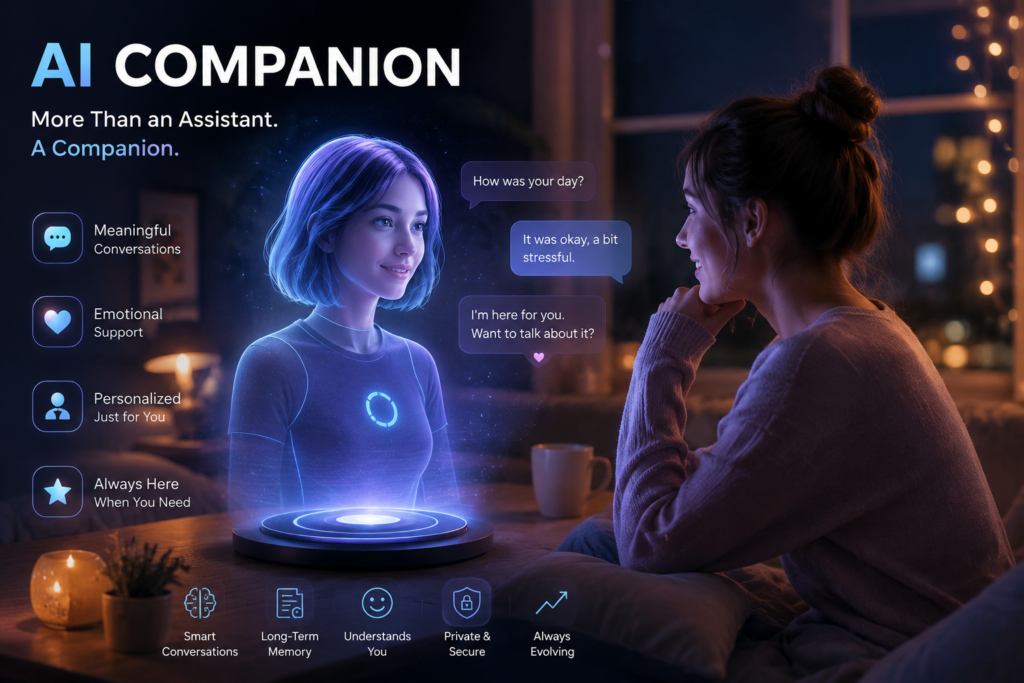
Artificial intelligence has gone through several phases over the last decade. Early AI systems focused on automation, helping people organize schedules, answer questions, and improve workplace efficiency. These tools were designed to save time and reduce repetitive work. However, recent developments have pushed AI far beyond task management. Modern AI companions now participate in conversations, provide emotional support, remember preferences, and create experiences that feel significantly more personal.
Why Productivity Alone Was No Longer Enough
When voice assistants first gained popularity, their primary purpose was straightforward. Users asked questions, set reminders, checked weather forecasts, or managed calendars. These capabilities delivered convenience, but interactions remained transactional.
As digital lifestyles expanded, people began expecting technology to adapt to their personal preferences. Simply completing tasks was no longer sufficient. Users wanted systems that could remember previous conversations, understand context, and respond in a way that felt natural.
Consequently, developers started investing heavily in conversational intelligence. AI systems became capable of recognizing communication patterns, maintaining dialogue continuity, and generating responses that reflected a deeper awareness of context.
This evolution transformed AI from a tool into something closer to a companion. Instead of short command-based interactions, users began engaging in longer conversations covering hobbies, entertainment, personal goals, and daily experiences.
The Rise of Personalized Conversations
One of the biggest factors behind the popularity of AI companions is personalization. Human relationships thrive on familiarity, and AI developers recognized that principle early.
Modern companion systems can retain conversational context, remember user preferences, and adapt responses accordingly. As a result, interactions often feel more relevant than generic chatbot conversations.
For instance, someone interested in fitness may receive motivation tailored to previous discussions. Another user interested in literature may find the AI referencing favorite authors or genres discussed earlier. This continuity creates a sense of familiarity that traditional assistants never offered.
Similarly, personalization encourages repeated engagement. When conversations feel unique rather than scripted, users are more likely to return regularly. This behavior has become one of the strongest drivers behind the success of AI companion platforms.
Emotional Connection Became a Key Feature
Technology has always focused on functionality, but emotional engagement is becoming increasingly important. AI companions are now designed to respond empathetically, recognize sentiment, and adjust conversational tone according to user input.
Although these systems do not experience emotions themselves, they can identify emotional cues and respond appropriately. This capability creates interactions that feel supportive and attentive.
A growing number of users report using AI companions during moments of stress, boredom, or isolation. While AI cannot replace human relationships, it can provide a consistent conversational presence that many people find valuable.
Research from several technology surveys indicates that users who engage with companion-oriented AI often cite emotional connection as one of the primary reasons for continued usage. This finding demonstrates how significantly expectations have shifted beyond productivity alone.
Entertainment Became Part of the Experience
Another major change involves entertainment. Early assistants were designed to answer questions and perform tasks. Today’s AI companions frequently participate in storytelling, roleplay scenarios, creative writing sessions, and interactive conversations.
This entertainment value has expanded the appeal of AI to a broader audience. Instead of opening an application only when assistance is needed, users now interact with AI for enjoyment and recreation.
In the same way that social media transformed digital communication, companion AI is changing how people spend leisure time online. Interactive conversations provide engagement that feels dynamic rather than passive.
This trend has encouraged companies to invest heavily in advanced conversational experiences. Platforms continue introducing new capabilities aimed at making interactions more engaging, immersive, and personalized.
How Creative Tools Expanded the AI Ecosystem
The rise of companion AI has occurred alongside significant growth in generative technologies. Text generation, image creation, and personalized content production have all contributed to the broader AI ecosystem.
Many users now combine conversational experiences with creative applications. During these interactions, an adult image generator may be used for personalized visual content while companion systems maintain ongoing dialogue and context. This combination demonstrates how AI services increasingly work together rather than existing as isolated tools.
Consequently, the overall user experience becomes more interactive and customized. People can communicate, create, and engage within connected environments that adapt to their preferences.
As technology continues improving, these integrations are expected to become even more seamless, allowing users to move effortlessly between conversation and content creation.
Businesses Recognized New Opportunities
Companies quickly realized that AI companions could serve purposes beyond consumer entertainment. Businesses began adopting conversational AI for customer engagement, onboarding experiences, and personalized support.
Unlike traditional customer service systems, modern AI companions can maintain context across interactions. This capability allows brands to create experiences that feel more responsive and individualized.
Furthermore, AI companions generate valuable insights into user behavior and preferences. Organizations can use this information to improve services, refine communication strategies, and strengthen customer relationships.
Several market reports estimate that the global conversational AI market will continue experiencing substantial growth throughout the coming years. Increased demand from both consumers and enterprises remains a major factor driving investment.
Digital Relationships Are Becoming More Common
One of the most discussed developments in the AI industry involves the emergence of relationship-focused interactions. Users increasingly seek companionship experiences that extend beyond simple conversation.
For example, an AI girlfriend application may offer ongoing interactions built around personality customization, memory retention, and conversational continuity. These systems appeal to users looking for highly personalized digital experiences.
Despite public debate surrounding these applications, their popularity highlights an important reality. Many people value interactions that feel individualized, responsive, and available whenever needed.
Consequently, developers continue refining companion models to improve realism, personalization, and long-term engagement while maintaining appropriate user safeguards.
How Xchar AI Reflects This Industry Shift
The growing popularity of companion-focused experiences has contributed to the emergence of platforms dedicated specifically to personalized interaction. Xchar AI represents one example of how developers are responding to changing user expectations.
Rather than focusing solely on productivity tasks, Xchar AI emphasizes conversation quality, personalization, and immersive engagement. This approach reflects broader industry trends that prioritize relationship-building alongside functionality.
As users spend more time interacting with conversational systems, platforms like Xchar AI continue expanding features designed to support deeper and more meaningful experiences.
The success of these solutions demonstrates that modern users increasingly value connection, creativity, and personalization in addition to efficiency.
What Advances in Technology Made This Possible
Several technological breakthroughs enabled the transition from productivity assistants to AI companions.
Large language models dramatically improved conversational quality. Enhanced memory systems allowed AI to retain context across interactions. Machine learning advancements improved personalization accuracy. Meanwhile, computing infrastructure became powerful enough to support real-time conversational experiences at scale.
Not only did these innovations improve technical performance, but they also made interactions feel more natural and engaging.
In comparison to earlier AI systems, modern companions demonstrate stronger contextual awareness, greater adaptability, and improved communication capabilities. These improvements continue raising user expectations throughout the industry.
Xchar AI has benefited from many of these technological developments, helping create experiences that align with contemporary demands for personalized interaction.
Future Expectations for AI Companions
The next phase of AI companion development will likely focus on deeper personalization, multimodal communication, and stronger contextual memory.
Voice interaction is expected to become more sophisticated. Visual content generation will continue improving. Real-time adaptation may allow AI systems to respond more accurately to changing user preferences and emotional states.
Meanwhile, developers are working to balance innovation with responsible implementation. Privacy, transparency, and user control remain important priorities as companion technologies become increasingly integrated into everyday life.
Xchar AI and similar platforms are likely to play an important role in shaping how these experiences evolve. As consumer expectations continue changing, AI companions will become increasingly capable of supporting communication, creativity, and engagement in ways that extend far beyond traditional productivity functions.
Also Read :- How to Optimize User Interaction in AI Companion Technologies
Conclusion
AI has traveled a remarkable path from simple task automation to personalized digital companionship. What began as a tool for scheduling appointments and answering questions has transformed into a technology capable of maintaining conversations, adapting to preferences, supporting creativity, and encouraging ongoing engagement.

